
The Role of Security in Business Continuity Planning

Introduction

Business continuity planning has traditionally focused on operational disruptions.

Natural disasters, system failures, and supply chain interruptions have long been considered primary threats to business operations. Plans were designed to ensure that organizations could continue functioning during unexpected events and recover quickly when disruptions occurred.

Today, that landscape has changed.

Cyber incidents are now one of the most significant threats to business continuity. Ransomware attacks, data breaches, and system compromises can halt operations, disrupt revenue, and impact customer trust in ways that traditional continuity planning was not designed to address.

As a result, cybersecurity has become a critical component of modern business continuity strategy.

Why Cybersecurity Is Central to Continuity

Modern organizations rely heavily on digital systems to operate. Core business functions such as communication, financial transactions, customer engagement, and supply chain coordination depend on the availability and integrity of these systems.

When those systems are disrupted by a cyber incident, the impact can be immediate and widespread.

Common consequences include:

  • Operational downtime across critical systems
  • Loss of access to data and applications
  • Disruption to customer-facing services
  • Financial loss due to halted operations
  • Reputational damage and loss of trust

Insights from the World Economic Forum’s Global Cybersecurity Outlook continue to highlight cyber resilience as a core business priority, reinforcing the need to integrate cybersecurity into broader continuity planning.

Business continuity planning can no longer operate independently of cybersecurity. The two must be integrated.

Where Traditional Continuity Planning Falls Short

Many continuity plans were developed before cyber threats became a dominant risk. As a result, they often focus on restoring systems after physical disruptions rather than responding to active threats within the environment.

This can lead to gaps such as:

  • Lack of preparation for ransomware scenarios
  • Limited coordination between IT, security, and leadership teams
  • Insufficient planning for data integrity and recovery
  • Unclear communication strategies during cyber incidents

Without incorporating cybersecurity considerations, continuity plans may not fully address the realities of modern risk.

Key Areas Where Security Supports Continuity

Integrating cybersecurity into business continuity planning requires a shift in focus. Rather than treating security as a separate function, organizations should view it as a core component of resilience.

Several areas are particularly important.

Incident Detection and Response

Early detection plays a critical role in limiting the impact of a cyber incident.

Organizations should ensure they have:

  • Visibility into system activity and potential threats
  • Defined incident response procedures
  • Clear escalation paths across technical and leadership teams
  • Coordination between security, IT, and business units

The ability to respond quickly can significantly reduce downtime and contain damage.

Backup and Recovery Capabilities

Reliable backup and recovery processes are essential for maintaining continuity during cyber incidents.

Key considerations include:

  • Regularly tested backup systems
  • Protection against backup tampering or deletion
  • Defined recovery time objectives (RTO)
  • Defined recovery point objectives (RPO)

The Cybersecurity and Infrastructure Security Agency (CISA) highlights secure backups as one of the most effective defenses against ransomware-related disruption.

System Resilience and Redundancy

Continuity planning should include measures that allow critical systems to remain available even during disruption.

This may involve:

  • Redundant infrastructure
  • Network segmentation
  • Failover capabilities
  • Cloud-based resilience strategies

These controls help ensure that operations can continue even if parts of the environment are compromised.

Communication and Decision-Making

Cyber incidents require coordinated decision-making across multiple stakeholders.

Organizations should define:

  • Communication protocols during incidents
  • Roles and responsibilities for leadership teams
  • External communication strategies for customers and partners
  • Coordination with legal, compliance, and insurance providers

Clear communication reduces confusion and supports faster, more effective response.

Testing and Exercising Continuity Plans

A continuity plan is only as effective as its execution.

Organizations should regularly test their plans through:

  • Tabletop exercises
  • Simulated incident scenarios
  • Cross-functional response drills

These exercises help identify gaps and ensure that teams are prepared to respond under real-world conditions.

Aligning Security and Continuity Strategy

To be effective, cybersecurity and business continuity planning must be aligned at both the operational and leadership levels.

This includes:

  • Incorporating cyber scenarios into continuity planning
  • Ensuring security teams are involved in continuity strategy
  • Aligning recovery objectives with business priorities
  • Providing leadership with visibility into cyber-related risks

Organizations that integrate these functions are better positioned to respond to disruptions and maintain operations.

From Protection to Resilience

Cybersecurity is often viewed as a defensive function focused on preventing incidents.

While prevention remains important, modern organizations must also focus on resilience. This means ensuring that operations can continue and recover even when incidents occur.

Business continuity planning provides the framework for this resilience, while cybersecurity provides the controls and capabilities needed to support it.

Final Perspective

Cyber incidents are no longer isolated technical events. They are business events with the potential to disrupt operations, impact revenue, and damage trust.

As a result, cybersecurity must be embedded within business continuity planning.
Organizations that integrate security into their continuity strategies will be better prepared to withstand disruption, respond effectively, and recover quickly.

In today’s environment, continuity depends on more than restoring systems. It depends on securing them.

Connect with an Expert for a Free Consultation

Secutor is your team of world-class problem solvers with vast expertise and experience delivering complete solutions keeping your organization protected, audit-ready, and running smoothly. Use the form below to contact us for a free consultation.

Enjoyed this Content?

Share this story on social media!

Andersen Consulting
Scroll to Top

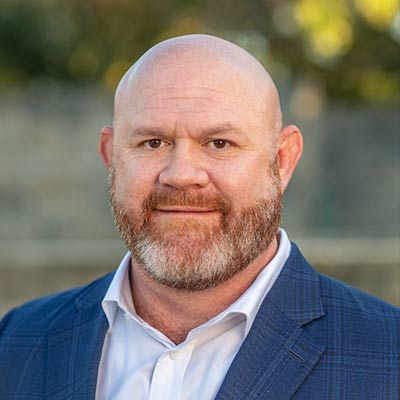
Jason Fruge

Consulting Chief Information Security Officer (CISO)

Jason Fruge is an accomplished Consulting Chief Information Security Officer at Secutor Cybersecurity, bringing over 25 years of deep expertise in information security. His storied career includes leading and managing robust security programs for Fortune 500 companies across retail, banking, and fintech sectors. His current role involves providing strategic guidance and advisory services to clients, focusing on security governance, risk management, and compliance.

Apart from his consulting responsibilities, Jason is an active member of the global cybersecurity community. He is a Villager at Team8, a prestigious collective of senior cybersecurity executives and thought leaders. Additionally, he serves as an Advisor at NightDragon, an innovative growth and venture capital firm specializing in cybersecurity and enterprise technologies.

Jason’s tenure as a CISO is marked by a proven track record in developing and implementing comprehensive security policies and procedures. He adeptly leverages security frameworks and industry best practices to mitigate risks, safeguarding sensitive data and assets. His expertise encompasses incident response and root cause analysis, where he has notably managed cyber incidents to prevent breaches and minimize business disruption and customer impact.

A key aspect of Jason’s role has been the creation and facilitation of executive and board-level cyber risk committees, ensuring organizational alignment and awareness. His responsibilities have extended to maintaining compliance programs for standards such as PCI and SOX, as well as leading privacy and business continuity programs. Holding prestigious certifications like CISSP, QSA, and QTE, Jason is also a recognized thought leader, contributing articles on cybersecurity to InformationWeek.

Jason’s passion lies in driving innovation and fostering collaboration in the cybersecurity field. He is currently seeking an executive CISO role in a leading retail, finance, or fintech organization, where he can continue to make significant contributions to the cybersecurity landscape.

Jennifer Bayuk

Cybersecurity Risk Management Expert

Jennifer Bayuk is a highly esteemed cybersecurity risk management thought leader and subject matter expert at Secutor Cybersecurity. Her extensive experience encompasses managing and measuring large-scale cybersecurity programs, system security architecture, and a wide array of cybersecurity tools and techniques. Jennifer’s expertise is further deepened with her proficiency in cybersecurity forensics, the audit of information systems and networks, and technology control processes.

Jennifer’s skill set is comprehensive, including specialization in cybersecurity risk and performance indicators, technology risk awareness education, risk management training curriculum, and system security research. Her academic achievements are noteworthy, holding Masters degrees in Philosophy and Computer Science, and a Ph.D. in Systems Engineering. This strong academic background provides a solid foundation for her practical and strategic approach to cybersecurity challenges.

Certified in Information Systems Audit, Information Systems Security, Information Security Management, and IT Governance, Jennifer is a well-rounded professional in the field. Her credentials are further enhanced by her license as a New Jersey Private Investigator, adding a unique dimension to her cybersecurity expertise.

At Secutor, Jennifer plays a pivotal role in steering cybersecurity initiatives, aligning them with organizational risk appetites and strategic objectives. Her ability to educate and train in the realm of technology risk has been instrumental in raising awareness and enhancing the cybersecurity posture of our clients. Her dedication to research and continual learning makes her an invaluable resource in navigating the ever-evolving cybersecurity landscape.

Jennifer Bayuk’s blend of academic prowess, practical experience, and certifications make her an indispensable part of our team, as she continues to drive forward-thinking cybersecurity solutions and risk management strategies.

Steve Blanding

CISO Consultant

CISSP, CISA, CGEIT, CRISC

Steve is an IT management consultant living in Dallas, TX. Steve has over 35 years of experience in executive IT leadership, IT governance, risk and compliance (GRC), systems auditing, quality assurance, information security, and business resumption planning for large corporations in the Big-4 professional services, financial services, manufacturing, retail electronics, and defense contract industries. He has extensive experience with industry best practices for adopting and implementing new technologies, IT service management frameworks, and GRC solutions that have dramatically improved customer satisfaction while reducing cost.

Industry Experience

  • State Government: 5 years
  • Retail: 5 years
  • Defense Contract: 5 years
  • Manufacturing: 2 years
  • Health Care: 2 years
  • Local Government: 2 years
  • Public Accounting (Big 4): 7 years
  • Insurance: 3 years
  • Financial Services: 5 years

Key Career Accomplishments

  • Conducted a full-scale ISO27000 audit 4 times over the past 6 years.  Also, conducted a “light” ISO27000 review of a small Dallas-based company in 2007.
  • Developed and authored a comprehensive IT security policy manual, incident response plans, training programs, security contingency plans and configuration management plans for FedRAMP regulatory compliance.
  • Conducted multiple DR and operational backup and recovery IT risk assessments of critical business systems on mainframe, LAN, and distributed system networks located across North America.
  • Conducted data centers audits for Tyco Corporation (Brussels, 2005 and Denver, 2006), Farmers Insurance (Los Angeles, 2006), Zurich Financial Services (Chicago, Kansas City, and Grand Rapids, 2006), and Convergys Corporation (Dallas, 2010, 2011, and 2012).
  • Led a project to remediate segregation of duties and streamline user access system security and HIPAA compliance administration across 5 regions in North America, resulting in cost savings of $700,000 per year (Kaiser Permanente).
  • Implemented Sarbanes-Oxley Section 302 and 404 IT general and application controls, reducing security administration costs and improving operational performance by 50% or $500,000 annually (Tyco Corporation).
  • Led the global SAP business-IT alignment, process re-design implementation initiative for financial accounting, materials management, production planning, quality management, sales and distribution, warehouse management, and plant maintenance, which resulted in creating $2,000,000 in cost savings.
  • Engaged by Arthur Andersen in Houston to transform the local IT organization and then direct 3 organizational mergers/consolidations, which resulted in a 25% reduction in operating costs, or $3,250,000, while improving customer satisfaction by 30%, and improving employee morale, technology availability and the quality of IT infrastructure and service delivery.
  • Assigned by Arthur Andersen global leadership to lead global project teams responsible for data center and customer support call center consolidation, which resulted in annual operational cost savings of 45% or $4,000,000.
  • Implemented ITIL service management practices for problem management, incident management, help desk, project management, and operations management.
  • Conducted SOX 404 audits at Duke Energy (6 months), Red Hat (3 months), Tyco (9 months), Zeon Chemicals (4 months), and Convergys (2 months). Experience includes control design/documentation and effectiveness testing.

Publications:

Author, various articles in EDPACS and Auerbach’s IT Audit Portfolio Series, 1981 – 2001

Author, various articles in the Handbook of Information Security Management, 1993 – 1995

Editor, Auerbach’s Enterprise Operations Management, 2002

Editor, Auerbach’s IT Audit Portfolio Series, 2000 – 2002

Consulting Editor, Auerbach’s EOM Portfolio Series, 1998 -2001

Ready to Find Your Solution?

Reach out using the form below, and we’ll contact you as soon as possible to schedule your consultation.

Ready to Find Your Solution?

Use the form to schedule a consultation, and we’ll reach out within 48 hours to confirm the appointment.

Considering this delay, please only select meeting dates 48 hours or more in advance. Your information will only be used to facilitate a meeting.